Wednesday, March 12, 2008

Corner shopping

Sony/Columbia has, for many years now, been milking the Miles Davis legacy, creating box set after box set based on the sessions for later albums such as In A Silent Way, Bitches Brew and Tribute to Jack Johnson. At £50 and up, these sets appealed to completists, audiophiles and spendthrifts alike. But, like the BBC putting off making Titus Andronicus until the very end of its Complete Works of Shakespeare cycle, Sony has shied away from issuing a box set based on the extended sessions for On The Corner, notoriously one of Miles' more "difficult" albums. Until now.

With On The Corner we’re a long way from Kind of Blue. Miles is in full-on early-70s black power mode. He doesn’t give a fuck. You can tell this just by looking at him—he’s wearing those glasses that look a bit like welding goggles. On The Corner is not an easy listen, and Miles isn’t pandering to the critics; a pre-Camper van Beethoven Eugene Chadbourne reviewed the LP for Coda magazine on its release, and opined:
His new music is pure arrogance. It's like coming home and finding Miles there, his fancy feet upon your favourite chair.
Miles reputedly felt that jazz had increasingly become a dead end, and this was his response, a soupy fusion of funk riffs and rock chops that owed more to Hendrix, James Brown and Stockhausen than it did to Coltrane. Incredible though it may seem when listening to the LP, he didn’t mean to alienate his rapidly shrinking fan-base, though that was the album's ultimate effect; in fact, he felt that the (con)fusion of On The Corner was the best way to connect with younger black audiences alienated by Nixon and Vietnam.

While Miles’ name is on the sleeve, much of the credit must be given to Jack DeJohnette (that hissing, insistent hi-hat), Chick Corea, John McLaughlin and Herbie Hancock. However, the lion’s share of the plaudits must go to producer Teo Macero, who trawled through hours of Davis’ crack band’s noodling with a pair of scissors, and somehow managed to salvage some sort of shape out of the endless jamming. The album is constructed almost entirely of tape loops and edits, and so audiences that have been exposed to Squarepusher and Autechre will not find it quite as alien as punters did in 1972.

The album received almost universally appalling reviews (even some of the musicians who played on it hated it-- tenor saxophonist David Liebman was particularly scornful), sold poorly and caused Miles to cease studio work until the 1980s. Its reputation grew slowly, though; so much so that the album was cited as a touchstone for bands such as Defunkt and Living Colour. Now it's held in high esteem by bands like The Noisettes, at least according to this article, which gives more background to the box set's release.

Reportedly, this is the last box set that Sony will issue of Miles’ work with them; presumably they don’t feel that the Complete You’re Under Arrest Sessions will sell big, or that there’s much of a demand for The Unreleased Tutu Recordings. And, to give Miles his due, he had changed his working methods by the early 80s, relying less on extracting materials from hours of extended jams, and more on structuring songs before going into the studio. Which means there probably isn’t all that much left in the vaults.

The box set, which confusingly also contains material that eventually surfaced on Get Up With It and Big Fun, is possibly overkill even for Miles enthusiasts. But just in case you think you may be in the mood for six hours of electronic jamming, I've included a quick download of one of the original album's shorter tracks, Black Satin, below. If you like it, you might like the album, the second side of which is variations on Black Satin. And if you really like it, there's always the box set, which you can buy here. As a bonus, you can also download a Sly and Robbie cover of the tune from their peerless Language Barrier album below.

Download Black Satin by Miles Davis mp3 (deleted May 2008)

Download Miles (Black Satin) by Sly and Robbie mp3 (deleted May 2008)


Bonus:

The Drood's website weighs in with a review of the original release

Return of the Mack

Has anyone else noticed that the chorus of the paean to Belgian lager Stella by new Norwegian pop sensation Ida Maria is a note-for-note steal of the chorus of Jimmy Mack by Martha and the Vandellas?

Compare and contrast:

Download Jimmy Mack by Martha Reeves and the Vandellas (mp3) (deleted May 2008)

Listen to Ida Maria Stella at her Myspace page

Tuesday, March 11, 2008

Anger is Holy

From Look magazine's report on the 2008 Oscars:
Charlize Theron and model/actress Natassia Malthe* teamed up to thrash Demi Moore, Ashton Kutcher and Kate Hudson in a game of dominos at the Beverly Hills Hotel do.
The question is, is it too late for Kenneth Anger to include this in Hollywood Babylon III?


*who hell she?- Ed

Friday, February 22, 2008

Boon times

May I draw your attention to Justin Toland's exemplary and insightful history of the New Hormones label? It's here, and it's a salutary reminder that Manchester music didn't all revolve around Tony Wilson and Rob Gretton.

Buy New Hormones rereleases.

Linder Sterling at The Tate 2006

Thursday, February 21, 2008

MGMT techniques


They sound like Delays recording a side with the late, lamented Clor. Their video looks like one of those Magic Eye 3-D pictures. They're dressed as extras from Lord of The Flies. And it features someone riding on a cat.

Heck, what's not to like? Apart from their god-awful name, of course...

Despite the name, I'm greatly enjoying MGMT. Your mileage may vary.

MySpace site

Wednesday, February 20, 2008

"Have Bananarama and Japan been seen in the same room?" asks AM in the comments below. Good point. And while we're at it, can I ask the same question vis a vis Robbie Williams' new paymaster Guy Hands and hands-off ITV boss Michael Grade? I'm convinced that GH is just Grade in a very cheap-looking wig...


Hands
Grade

Tuesday, February 19, 2008

Pop Goes The Eighties

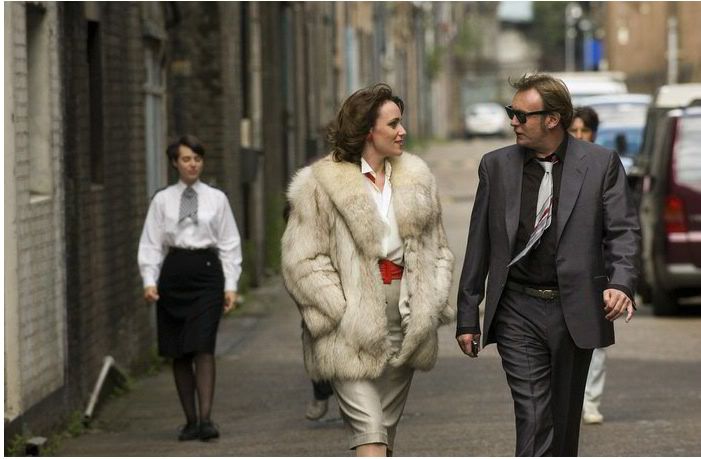
When Mark Stewart and The Pop Group recorded We Are All Prostitutes at the dawn of Margaret Thatcher’s first term of office, they probably didn’t imagine that it would form the central plot device of a prime-time BBC1 drama nearly thirty years later. In fact they’d have been lucky to get a mention on The Old Grey Whistle Test at the time. However, the climate at the Beeb (and in Britain as a whole) has changed so dramatically in the intervening thirty years, and post-punk been assimilated so completely into the canon of popular culture, that this is indeed what transpired on last week’s Ashes To Ashes.

The second episode of the series, set (diegetically, at least) in the early eighties, revolves around a spotty and disaffected teenager in London’s soon-to-be-gentrified East End, who turns out to be so enamoured of The Pop Group’s anti-establishment musings that,
rather than forming an amateurish white funk group as most of us might have done, straps a bomb to himself and helps to hasten Rupert Murdoch’s hegemony in Wapping (hey, diegesis and hegemony in the same paragraph. This 1981 thing is really catching!). Prior to this denoument (OK, I'll stop it now), he uses lettering from a Pop Group poster to create an anonymous ransom note, and Alex Drake, the detective leading the case, is seen waving a copy of the 7 inch single of Prostitutes at an interrogation scene and quoting the lyrics of said single to the befuddled villain (and how delicious was it to hear that cut-glass accent intoning “
Everyone has their price/And you too will learn to live the lie/Aggression/Competition/Ambition”?)A snatch of the song is also heard during the episode. At the time of writing, the episode is still available (to those in the UK, at least) on the BBC’s iPlayer.

If you didn’t see it, you should. As well as it being exceptionally entertaining and well-written (with multiple laugh-out-loud moments), I’m heartened that Ashes to Ashes doesn’t just go down the lazy and clichéd route of many 80s-themed dramas, i.e. having lots of references to Adam Ant, Bucks Fizz and leg warmers. It does have these, of course, just as it features an Audi Quattro as Gene Hunt’s car of choice. I mean, it would be remiss not to laugh at some of the excesses of the decade. But credit where it’s due, the writers show us that it wasn’t all Toni Basil and Kim Wilde, and in this episode got to grips with some of the economic, political and, yes, musical stories that fall outside the Channel 4-style “I Love the 80s” cultural purview.

It’s doubtful that the Pop Group will feature so heavily in any other high-profile TV slots (though For How Much Longer Will We Tolerate Mass Murder could conceivably soundtrack a John Pilger documentary), so enjoy this while you can. If you can’t see the episode in question (and even if you can), you can hear the whole of the single that informs the premise of the episode below.

Download We Are All Prostitutes by The Pop Group (mp3) (deleted May 2008)